


Running an online store is really exciting. But without SEO, your store is almost invisible. Search engines need help to understand what you sell and who your customers are. This e-commerce SEO checklist for 2026 will guide you step by step, simple, clear and really actionable.
What is e-Commerce SEO?
E-commerce SEO means optimising your online store so that it ranks higher in Google when people search for products. For example, instead of ranking for a generic keyword like shoes, you aim to rank for women’s lightweight running shoes in India. These keywords attract buyers, not random visitors.
Step-by-Step eCommerce SEO Checklist for Online Stores
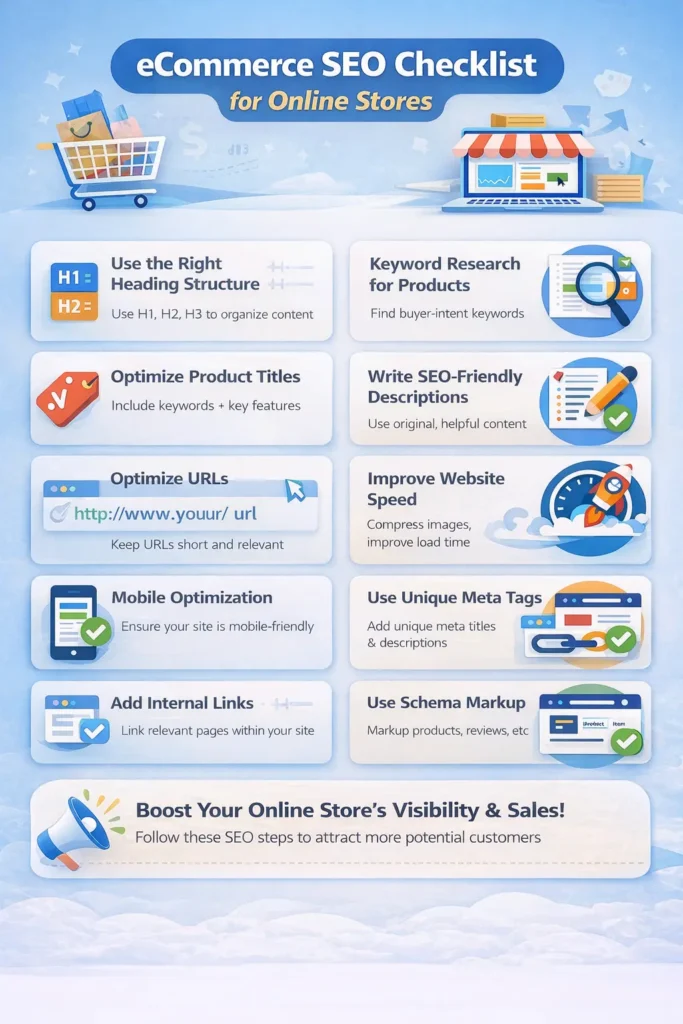
Use The Right Heading Structure
Google loves clean structure. For each one, you can use only the main page title only one per page. For H2, you can use sections and break your page into topics like the benefits of lightweight shoes. You can even mention subpoints under each section H3, as this helps Google understand your content and your users can read easily.
Keyword Research For Products
You need to find what customers are actually searching for. Tools like Google Keyword Planner can help.
Focus on long-tail keywords, buying-intent terms, and low-competition phrases. Always analyse competitors to see which keywords they are targeting.
Modern keyword research goes beyond volume. Focus on:
- Long-tail keywords
- Buyer-intent phrases
- Location-specific searches
- Low-competition opportunities
Optimise Product Titles
Your product titles should be really clear, like product name, main feature and brand. For example, you can go for Nike women’s running shoes-lightweight breathable and the 2026 model. Avoid titles like stylish shoes for ladies.
Write SEO Friendly Product Descriptions
Never copy product descriptions from manufacturers. Google strongly dislikes duplicate content.
Instead, explain features, highlight benefits, and answer common buyer questions. Keep paragraphs short and use bullet points for better readability.
Optimize URL’s
URLs should be:
- Short and readable
- Keyword-focused
- Free from unnecessary parameters
Clean URLs improve crawlability and user trust.
Improve Website Speed
Slow websites lose buyers. You can check speed using different tools. At the same time, you can also improve the website speed by compressing images, removing heavy plugins and using fast hosting.
Mobile Optimization
A lot of shoppers browse online. You need to make sure that the buttons are easy to click text is readable images resize properly. Google ranks mobile-friendly websites easily.
Use Unique Meta Titles And Descriptions
Meta title means headline in Google, and meta description is a short summary. You just need to ensure every page is unique, no duplicates at all.
Add Internal Links
Internal links help users and Google. You can link pages like blog and products, or categories and products. This keeps people on your website longer, which boosts rankings.
Use Schema Markup
Schema markup helps Google display rich results such as product ratings, prices, and stock availability.
This improves visibility and click-through rates in search results.
Create Helpful Blog Content
Blogs should answer real customer questions.
Content ideas include:
- Buying guides
- Product comparisons
- Use-case articles
Helpful content builds authority and supports Google’s EEAT (Experience, Expertise, Authoritativeness, Trustworthiness) framework—something SEO experts at Thanksweb strongly recommend.
Why work with an SEO agency like Thanksweb?
SEO takes a lot of time. Experts help online stores with keyword strategy, technical SEO, content planning and product optimisation. If you want faster results, professional guidance is completely worth it.
You can read more about eCommerce SEO:
How Long Does eCommerce SEO Take to Show Results?